
Sweihan Jail Abu Dhabi is an immigration detention centre in Sweihan (in the Emirate of Abu Dhabi, UAE). It is used in relation to immigration issues such as visa breaches, residency issues, identity checks and deportation. It is on the Global Detention Project list, with the Federal Authority for Identity, Citizenship, Customs and Port Security (ICP) being the responsible authority. If you’re a family member and you’re trying to find out about a relative in detention, you should check with ICP to confirm the current custody status. Visiting arrangements, the documents required and the process for release will be case-specific and will need to be confirmed via ICP.
What Is Sweihan Jail Abu Dhabi?
The name generally refers to the Sweihan immigration detention facility in the Emirate of Abu Dhabi (UAE). The Global Detention Project refers to it as an immigration detention centre and lists the Violators and Foreigners Follow-up Department, Abu Dhabi, as an alternative name. Its published record identifies the Federal Authority for Identity, Citizenship, Customs and Port Security (ICP) as the responsible authority. Source: Global Detention Project
This distinction is important as immigration detention and criminal imprisonment are for different purposes.
An immigration detention centre can hold someone whilst the matter of their immigration/residency is being dealt with. A standard prison, by contrast, can hold someone either whilst they await criminal proceedings or whilst they are serving a sentence imposed by a court.
The facility’s specific role in any individual case must be confirmed with the relevant authority responsible for that individual’s detention. Simply being in immigration detention does not in itself mean that a person has been convicted of a criminal offence.
Immigration Detention vs Criminal Imprisonment
| Detail | Immigration Detention | Criminal Imprisonment |
| Purpose | Immigration or visa issues | Criminal offences |
| Authority | ICP or relevant immigration department | Police, courts or prison authorities |
| Common issues | Visa expiry, residency or deportation | Charges, trials or sentences |
| Release | Depends on the immigration case | Depends on the court’s decision |
| Family visits | Confirm with the responsible authority | Follow prison visiting rules |
Some cases will involve both immigration and criminal issues. Families should contact the appropriate authority to establish why the person has been detained and what the process is.
Location and Geographic Information
The facility is in Sweihan in the Emirate of Abu Dhabi (UAE). Sweihan is a settlement in the Al Ain region, somewhere between Abu Dhabi and Al Ain. It’s an agricultural area with good road links throughout the region.
The Global Detention Project has the facility listed as Sweihan, Al Ain, Abu Dhabi. That said a publicly available geographical description should not be taken as definitive in terms of a visitor entrance, a postal address, or an appointment address.
People going to visit should get the directions from the appropriate authority prior to travel. A general map pin may well indicate the area but won’t necessarily show you the correct entrance and won’t confirm that you’re allowed to attend in person.
How to verify the correct address
Before you get the transport arranged, get in touch with ICP via their proper channels and let them know that you need to confirm where the person is being held.
Give the detainee’s full name and any passport or ID or immigration file details that you may have via an appropriate official channel. Ask the authority if the individual is in fact being held at Sweihan and if there is an office there which would deal with enquiries or approved visits.
Don’t just go on third-party directories, social media posts or an address taken from an old article. Detention arrangements and the admin side of things can change and getting to the wrong place can cause all sorts of delays.
Why Might Someone Be Detained There?
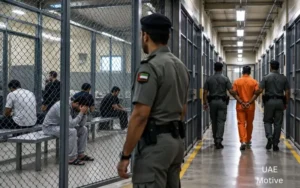
Immigration detention can arise in relation to a person’s immigration status or as part of an administrative process under UAE law. The exact reason will of course, be case-specific and will depend on the decision of the relevant authority.
Possible issues that may require investigation include:
- An expired or cancelled visa or residence permit.
- A suspected or proven breach of immigration rules.
- Identity or nationality verification.
- Outstanding immigration/residency procedures.
- Travel document arrangements in relation to departure from the UAE.
- Proceedings in relation to a removal or deportation decision.
These are just general examples of immigration issues, not a verified list of all the reasons for detention at Sweihan.
A visa overstay won’t in itself establish that you’ll be held at this particular facility. You can have an immigration file even after you’ve served your sentence, and someone else may be in a criminal case which would require contact with a different agency.
What happens after detention?
The process will vary depending based on custody. The authorities may need to check identity, look at immigration records, ascertain the status of an application or matter and/or arrange the necessary documentation for a lawful departure.
Where there is a deportation order or some other formal order in place, the terms of that order and its legal consequences must be checked directly. Families should not presume that simply paying a fine, getting a passport or buying an airline ticket will in any way lead to their release.
If there’s a criminal investigation or a court case involved, then the family should establish whether the matter is still before the police, the Public Prosecution or a court. A UAE-licensed lawyer can help to clarify the position and advise as to any available remedies.
Official Contact Details
For any queries relating to immigration detention, the most appropriate point of contact is the Federal Authority for Identity, Citizenship, Customs and Port Security (ICP).
The authority has official contact points for immigration and residence services. Its published contact details include the following:
| Contact method | Details |
| Inside the UAE | 600 522 222 |
| Calling from outside the UAE | +971 600 522 222 |
| contactus@icp.gov.ae | |
| Official website | icp.gov.ae |
Contact details should be verified against the official ICP website before use (especially if you’re phoning from abroad or in an emergency).
What information should families prepare?
Having the relevant details to hand will of course make the enquiry more efficient. Prepare the following information where possible:
- The detainee’s full name as per their passport.
- Nationality and passport number.
- Emirates ID or residence permit details (if available).
- Immigration file number or other official reference.
- Date and place of arrest (approximate).
- Contact details of the relative who’s enquiring.
Not every item will be available in every case. You start with what you have and then ask the authority what you need to do if further ID is required.
Share your personal documents only via the official channels or with an authorised legal representative. Don’t send copies of your passport or any other sensitive documents to anyone you don’t know who claims to be able to find a detainee or get them released.
What should you ask ICP?

Keep it specific. Is the individual in ICP custody? Is Sweihan the correct facility? Which office is the one that’s responsible for the case?
You can also enquire as to whether a family member can obtain the information, what documents are required, whether a visit can be arranged and whether an immigration decision has in fact been made which can be lawfully communicated to the family.
The authority may of course be obliged to restrict disclosure of certain information on legal or privacy grounds. If they’re unable to provide the details of the case over the phone, then you’ll be asked what form of enquiry you’d like to make.
Visiting Rules and Family Access
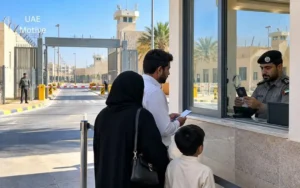
Families will often want to visit their detained relative as soon as they can. There is no reliably confirmed public visiting timetable that can be assumed to apply in all cases at Sweihan. You have to confirm visiting arrangements with the relevant authority for the individual case.
The rules that apply in an ordinary correctional facility in Abu Dhabi should not be the default rules for an immigration detention centre. The appropriate rules will depend on the type of custody, the authority in question and any restrictions that may be in place.
How to arrange a visit
Just follow these steps before you go and make your travel arrangements.
- Confirm the site of detention. Get in touch with ICP to establish whether the individual is being detained at Sweihan or at some other facility.
- Ask about eligibility. Explain your relationship to the detainee and whether you are an immediate family member, another relative, or a legal representative.
- Check the documents required. Find out if a passport, an Emirates ID, proof of relationship, case reference or a written authorisation is required.
- Get approval before travelling. Confirm the date, time and precise venue of the appointment. Don’t assume that simply turning up at the facility will be sufficient.
- Obey the instructions given. Find out what is permitted (belongings), what ID is required, what communication restrictions apply and whether there are any special arrangements for children or overseas visitors.
Are video calls available?
Remote visits are available for certain inmates in the Abu Dhabi correctional and rehabilitation system. The official information from the Abu Dhabi Judicial Department describes the virtual visitation arrangements via the Nafidhaty application, with requests to be made through the government’s service channels (TAMM).
However, those arrangements pertain to the relevant correctional and rehabilitation services. They don’t in any way establish that every person in the Sweihan immigration facility is eligible for a video call.
Families should first check who has the custodial authority and then determine which visitation service (if any) applies to their situation.
For background, consult the Abu Dhabi Police official website and the UAE government’s correctional facilities information.
Legal Assistance and Detainee Rights

Anyone dealing with detention should seek accurate information about the legal basis for custody, available communication channels, and the procedures that apply to the case.
The Government of the UAE says that in its prisons there is provision for medical care, food, contact with family and legal representatives and rehabilitation. That should not be read as meaning that those are the exact arrangements in place at any particular immigration detention centre.
When should a lawyer be contacted?
Consider obtaining advice from a UAE-licensed lawyer when:
- The reason for the detention is not known.
- The individual has a criminal investigation or court case outstanding.
- A deportation order or some such formal decision has been issued.
- The family needs to be made aware of whether a decision can be challenged.
- There are questions as to access to legal advice or the ability to communicate with the detainee.
- The case is one of several authorities or conflicting information.
A lawyer could go through the documents, identify the responsible body and explain the legal process that would apply. The families themselves need to supply the correct information and not rely on any promises of a guaranteed release.
If the detainee is a foreign national, then the relevant embassy or consulate may also be in a position to explain their consular assistance. The level of assistance they can provide will of course vary depending on the circumstances and the rules that apply.
Can a detainee be released immediately?
There is no one release timeline applicable to every immigration detention case. The outcome will be contingent upon the grounds for detention, the status of the immigration file, the level of identity verification, any pending proceedings and any relevant decision or order.
An online article will not be in a position to tell you whether or not an individual is eligible for release. Families should contact the relevant authority with regard to the case to find out the current status and if they require a formal decision to be reviewed, they should seek legal advice.
Immigration Procedures and Deportation
Immigration detention and deportation/removal are two separate things. Detention is about the person’s custody. Deportation/removal is a separate legal and administrative process which determines whether or not the person is to be removed from the country.
The appropriate procedure will depend on the facts of the case, the legal basis for the decision and the rights and/or remedies available in the particular case.
Documents and travel arrangements
Authorities may be required to check ID, nationality, passport details and other travel documents. If a passport is missing or has expired, the relevant embassy or consulate may be able to advise on the process for obtaining a replacement or an emergency travel document.
Families should not buy non-refundable tickets or make any firm departure arrangements until the responsible authority has confirmed that the individual is legally entitled to travel and has provided the requisite instructions.
If the individual is challenging the grounds for detention or removal, then get legal advice as a matter of urgency rather than simply allowing it to go through the normal administrative channels.
Where can the relevant law be checked?
The official UAE legislation website is a good place to start when looking at the federal laws relating to entry and residence. The UAE government website also has information on justice, safety and legal services.
For individual cases, you should of course use the current legislation and seek advice from a properly qualified legal professional. General summaries on third-party websites are likely to miss amendments, exceptions and procedural requirements.
Common Mistakes to Avoid
Families who are facing detention will often be in need of information very quickly. There are a number of avoidable mistakes that can actually make the process more difficult.
Rely on unverified visiting hours (a visiting hours schedule published for another prison or on a public holiday may not be relevant to Sweihan). Always check before you travel.
Assume every detention case is a criminal case. Immigration detention and criminal detention can be the realm of different authorities and different procedures. You have to establish the legal basis for the detention in the first instance.
Paying unofficial intermediaries: Be very wary of anyone who is going to guarantee your release, who is going to promise you access to certain people or information, or who is going to ask for money via some unverifiable channel. Use the official services and properly qualified legal representatives.
Treat online contact details as gospel. Check telephone numbers, email addresses, appointment process and directions via official sources.
Expect a definite release date? No such thing. Processing times are dependent on the circumstances and only the responsible authority can provide case-specific information (subject to the relevant disclosure rules).
Sharing sensitive documents in the public arena: passport numbers, ID documents and immigration references in particular should not be posted in public groups or sent to people you don’t know.
Conclusion
If a relative is potentially being held at Sweihan, the first thing to do is establish precisely where the person is and what the legal basis for custody is. Get in touch with ICP via their proper channels, enquire about approved family access and if the issue is one of formal detention or deportation, then you should obviously get appropriate legal advice.
The key thing to bear in mind regarding Sweihan Jail in Abu Dhabi is that immigration detention is not the same as a standard criminal sentence. It’s absolutely vital that you check who the responsible authority is and that you follow their current instructions. This will help families to avoid getting the wrong information, having to make unnecessary trips and avoid any delays in getting the right support.
Read Also: Musaffah Police Station Abu Dhabi
Frequently Asked Questions
Where is Sweihan Jail Abu Dhabi located?
It’s in Sweihan in the Al Ain Region of Abu Dhabi (UAE). Contact ICP to confirm the exact visitor address before travelling.
What is the official contact number?
Call ICP on 600 522 222 (in the UAE) or +971 600 522 222 (from abroad). See the ICP website for the latest information.
Is Sweihan an immigration detention centre?
Yes. The Global Detention Project lists it as an immigration detention centre operated by ICP.
Can family members visit detainees?
Visits are possible on a case-by-case basis and subject to facility rules. Contact ICP to confirm that permission is granted, to check what documents are required and to arrange the appointment.
Are visiting hours available online?
There was no verified public visiting schedule put in place. You should contact the responsible authority for the most up-to-date visiting times before any visit.
How can I check whether a relative is detained there?
Contact ICP with the individual’s full name and any ID they may have. If the individual is with another authority, then find out which department is responsible for the case.
Does detention mean the person will be deported?
No, detention doesn’t necessarily lead to deportation. The outcome is going to be determined by the individual’s circumstances and the decisions of the authorities.
Can an embassy help a foreign national?
Yes. An embassy or consulate may provide consular guidance and help communicate with authorities, but it cannot guarantee release.
